I visited an in vitro fertilization (IVF) clinic today as part of our OB/GYN rotation. I am aware of the debate around assisted fertility – Should people who are infertile for whatever reason be able to use technology to achieve pregnancy? Should the government allocate any resource for assisted fertility? Isn’t infertility natural selection in play – that people who are infertile are not meant to pass their genes to the next generation? Are we interfering with evolution by providing the means for those people to achieve pregnancy? – but with the IVF clinic visit, I came to realize a whole broadened range of ethical issues beyond the rationale behind the use of IVF.
Okay, this is an IVF clinic, the people working here and the patients probably all have looked past the ethical issues of using IVF. But IVF comes with a slew of new ethical issues. Each IVF cycle produces a number of embryos; the guideline allows only one to be implanted, so the rest of them are frozen for five years. After that, the couple needs to make a decision on what to do with them – keep them frozen for another five years or let them thaw (and die). What if a couple splits during that time? Does each parent have custody of half of the embryos? What if the father gives custody of all of the embryos to the mother? Will he still be liable for child support if the mother then decides to have a child using one of the embryos? Just when the law and guidelines are interpreted to provide a solution to a scenario, more what-ifs can come up, each one pushes the ethical and legal boundaries and contributes to the minefield that can potentially blow up in the faces of doctors and patients.
One of the doctors told us that, after working in the IVF for a while, he came to realize that everyone needs to come to terms with each ethical dilemma that may arise with every decision. On the issue of when life starts, he has come to the conclusion that life does not always start at conception. Like with natural conceptions where chromosomal abnormalities are the most common cause of first-trimester miscarriage, a good percentage of the eggs fertilized via IVF technology contain chromosomal abnormalities and thus not viable for implantation. Not all eggs and sperms are created equal and, due to de novo mutations, not all embryos are created equal. To someone who believes absolutely that life begins at conception, the number of embryos destroyed for that reason alone would make the place seem on par with abortion clinics, not to mention the thawing of all the frozen embryos. Clearly, one would have to become a moral relativist to be able to work in this field.
Wednesday, September 10, 2008

Thursday, September 4, 2008
Bring Down the House
Te, te Deum laudamus;
Te, te Dominum confitemur:
Te aeternum Patrem
omnis terra vene ratur.
For the last two weeks, I have been humming this opening phrase and other segments of Haydn’s Te Deum. They just form a loop, playing over and over in my head, whether I am reading, commuting, showering, sitting on the toilet, or even watching surgeries. Whenever I am not concentrating one hundred percent on what I am doing, this soundtrack wedges its way through to the front of my brain and starts the automatic loop. I must look like a lunatic on the bus sometimes, staring out the window with my head bobbing and feet tapping, but without the ubiquitous headphones sticking out of my ears.
I sing in the bass section of The Queensland Choir and, like what happens three or four times a year, it’s around concert time again. This time, we are doing Haydn’s Te Deum and Puccini’s Messa di Gloria. With rehearsals twice a week for a month before concerts and increasing familiarity with the music, it is inevitable that the music becomes a temporary fixture in the jumble of information swirling around my head. The music is beautiful and I really enjoy singing it, but having it played in a continuous loop can become a drag. Mercifully, I tend to be able to file it deep into the recesses of my mind after each concert so it does not become a nuisance.
Last Sunday we went down to Bangalow, New South Wales, just inland from Byron Bay, to do the Puccini piece to a full house. It was good to see in the audience a good number of dark spots in the sea of silvery white hair. I know, performances of classical music, with its formal, stiff-upper-lip settings, traditionally high-brow and inaccessible attitude, and strictly no interaction between the audience and performers and no improvisation, can hardly pose any threat to rock concerts. For our concert, we performed at a small Catholic cathedral with the audience filling every pew. With the warm afternoon glow streaming through the windows, we rocked the house. Well, as much as one can rock with classical music.
Our concert tomorrow will be in the Cathedral of St. Stephen in the middle of Brisbane. I am sure we will follow last weekend’s performance and bring down the house once again. What’s the music equivalent of “break a leg”? Strain a vocal cord?
Qui tollis peccata,
peccata mundi
suscipe deprecationem
deprecationem nostram…
Te, te Dominum confitemur:
Te aeternum Patrem
omnis terra vene ratur.
For the last two weeks, I have been humming this opening phrase and other segments of Haydn’s Te Deum. They just form a loop, playing over and over in my head, whether I am reading, commuting, showering, sitting on the toilet, or even watching surgeries. Whenever I am not concentrating one hundred percent on what I am doing, this soundtrack wedges its way through to the front of my brain and starts the automatic loop. I must look like a lunatic on the bus sometimes, staring out the window with my head bobbing and feet tapping, but without the ubiquitous headphones sticking out of my ears.
I sing in the bass section of The Queensland Choir and, like what happens three or four times a year, it’s around concert time again. This time, we are doing Haydn’s Te Deum and Puccini’s Messa di Gloria. With rehearsals twice a week for a month before concerts and increasing familiarity with the music, it is inevitable that the music becomes a temporary fixture in the jumble of information swirling around my head. The music is beautiful and I really enjoy singing it, but having it played in a continuous loop can become a drag. Mercifully, I tend to be able to file it deep into the recesses of my mind after each concert so it does not become a nuisance.
Last Sunday we went down to Bangalow, New South Wales, just inland from Byron Bay, to do the Puccini piece to a full house. It was good to see in the audience a good number of dark spots in the sea of silvery white hair. I know, performances of classical music, with its formal, stiff-upper-lip settings, traditionally high-brow and inaccessible attitude, and strictly no interaction between the audience and performers and no improvisation, can hardly pose any threat to rock concerts. For our concert, we performed at a small Catholic cathedral with the audience filling every pew. With the warm afternoon glow streaming through the windows, we rocked the house. Well, as much as one can rock with classical music.
Our concert tomorrow will be in the Cathedral of St. Stephen in the middle of Brisbane. I am sure we will follow last weekend’s performance and bring down the house once again. What’s the music equivalent of “break a leg”? Strain a vocal cord?
Qui tollis peccata,
peccata mundi
suscipe deprecationem
deprecationem nostram…
Sunday, August 31, 2008
In Retrospect: Grand Canyon National Park
September, 2002: my first drive across the US. My sister and I went to Europe for a couple of weeks, then drove from Washington, DC, to Fresno, California. We crossed the Deep South and dodged a hurricane. In the last stretch of the two-week drive, we stopped at Grand Canyon in Arizona for two nights. The mornings and nights were chilly at that elevation, and early October meant the low season, so the crowds were small. We got up early to watch the sunrise, twice. We did little walks down the canyon, but didn’t go far.
 The Grand Canyon is in the northwestern corner of Arizona.
 Sunrise over Grand Canyon
 It was a hazy day. We learned from the Visitor Center that the westerly brought smog from Los Angeles to Grand Canyon from time to time. Today was one of those days. Thanks, Angelenos.
 Standing at the precipice along the South Rim
 The Abyss
 The Canyon changed color as the day went by. The setting sun gave everything an orange glow, despite the bluish haze.
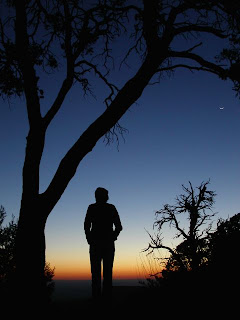 The next day, we got up early again to watch the sunrise at a different spot.
 Being at the top of the canyon, there is not much with which to frame the sunrise. These couple of dead trees would have to do.
 The haze from the day before was still hanging around.
 The Grand Canyon is in the northwestern corner of Arizona.
 Sunrise over Grand Canyon
 It was a hazy day. We learned from the Visitor Center that the westerly brought smog from Los Angeles to Grand Canyon from time to time. Today was one of those days. Thanks, Angelenos.
 Standing at the precipice along the South Rim
 The Abyss
 The Canyon changed color as the day went by. The setting sun gave everything an orange glow, despite the bluish haze.
 The next day, we got up early again to watch the sunrise at a different spot.
 Being at the top of the canyon, there is not much with which to frame the sunrise. These couple of dead trees would have to do.
 The haze from the day before was still hanging around.
Saturday, August 30, 2008
Riverfire
There is some kind of festival going on in South Bank. On schedule tonight is fireworks over the Brisbane River and a fighter jet from the Royal Australian Air Force doing some kind of dump and burn maneuver over the city. It happens every year; but I never bothered to go and watch it before.
But tonight, I strolled down to Kangaroo Point, found a spot with a good vantage point and not completely blocked by ten layers of people, and strapped my camera to the railing to take a few snaps.
 Wooh, pretty fireworks. Is it just me or is Brisbane’s skyline really bland?
But tonight, I strolled down to Kangaroo Point, found a spot with a good vantage point and not completely blocked by ten layers of people, and strapped my camera to the railing to take a few snaps.
 Wooh, pretty fireworks. Is it just me or is Brisbane’s skyline really bland?
Friday, August 22, 2008
Brisbane Bound
Four weeks came and went in Hervey Bay. It has been busy but also very productive. I caught all four babies. The consultants and PHOs have been refreshingly nice to us and the teaching was excellent. So, I am leaving Hervey Bay feeling that the subject of obstetrics and gynecology is much more under control than four weeks ago. I don’t think I can expect clinicians in Brisbane to give me as much attention in the next four weeks.
Good bye, Hervey Bay. You have been good to me.
Good bye, Hervey Bay. You have been good to me.
Sunday, August 17, 2008
In Retrospect: Beijing
After my first-year elective in Wenzhou, China, at the end of 2005, I made a little side trip to Beijing to visit a couple friends. It was around Christmas time and the sky was miraculously clear during my stay. The high-pressure system that rolled in from Siberia cleared the smoggy air, and the trade off was that it got COLD! For a couple of days, I was walking around in temperatures of minus six degrees Celsius as the daily high. Everyone burned coal for cooking and heating and so, almost everywhere I went, the sulfurous stench of burning coal hung in the air.
I dutifully hit some of the must-see places: Tian Tan, the Forbidden City, and the Great Wall. In the mean time, I filled up on the unassuming, hearty local fares, got lost in a few of the remaining Hutong on a rented bike, and sharpened my bargaining skills at the Silk Market.
 A couple of policemen standing next to the entrance to Tian Tan, otherwise known as the Temple of Heaven. The main temple was closed for renovation, a recurring theme at many of tourist attractions during the low season.
 The studded bright red gates opened to the causeway to the Hall of Prayer for Good Harvests in the distance.
 This conjoined twins-like pavilion was a popular spot for locals to rest and exchange gossip.
 View of one of the gates through holes of a cast iron urn.
 Long corridors like this connect different temples inside Tian Tan Park. This one was the place where local retirees came to play chess, do their knitting, or practice their Peking opera.
 Standing guard in front of Tiananmen Square under the watchful eyes of The Chairman
 One of the smaller gates of Tiananmen
 One of the pair of stone lions standing guard in front of the Hall of Supreme Harmony
 Handles on one of the giant bronze urns placed throughout the Forbidden City. These urns were used for holding water to put out fires.
 Blue Sky, Red Wall, Bronze Urn
 Getting lost wandering around the maze of corridors is a guarantee. Each one of the 9999 rooms in the Forbidden City has its own history.
 The low afternoon sun cast a shadow of the decorated roof ridge from an adjacent building on the wall of this one.
 Reflections
 The cracked paintjob on this heavy door was starting to show its age.
 The sun was out, but it wasn’t working. I was wearing every item of clothing I had.
 In the late afternoon, people started to stream down the long lane between two courtyards.
 Leaving the Meridian Gate
~~~~~~~~~~
 I did a 10k walk on the Great Wall from Jinshanling to Simatai. The terrain ranged from easy walk on flat and well-maintained sections of the wall to scrambling up vertigo-inducing steep and dilapidated sections.
 Along the way, hawkers followed us and tried to sell us postcards and other souvenir. This being the dead of winter, farmers from villages along the wall took to selling trinkets for extra income.
 Taking a break after one of the steep climbs
 View through a window in a watch tower
 The weak sun laid low on the southern sky the whole day, giving the brown hills and the wall a forlorn appearance.

 A section of the wall that had not been rebuilt – not recently anyway
~~~~~~~~~~
 I rented a bicycle and rode aimlessly along the maze of lanes through old neighborhoods that had not been torn down. Many of the hutong I saw were crumbling, damp, cold, and lacked plumbing. As much as we decry the demise of these traditional dwellings, I wouldn’t be surprised if the residents would prefer to live in bright high-rise apartments.
 An elderly man pushing his cart down a lane, seemingly oblivious to the fast-changing world around him
 Banana Vendor
 Tiny eateries packed tightly together along a small lane. Many of them consisted of no more than a couple of small tables in the front room of a family’s home, but the food they served was cheap, delicious, and filling.
 Brightly lit and frequented by the well-heeled, Wangfujing is one of the premier shopping centers in Beijing.
 At Panjiayuan Market, Mao statues seemed to be one of the hot-ticket items.
 Hutong Scene 1
 Hutong Scene 2
 This Muslim eatery, just down the block from my hostel, served delicious breakfast. The locals loved it too.
 Drying Vegetables
 Coal, the main fuel used by a lot of people living in hutong, was still distributed by people pedaling flatbed tricycles.
I dutifully hit some of the must-see places: Tian Tan, the Forbidden City, and the Great Wall. In the mean time, I filled up on the unassuming, hearty local fares, got lost in a few of the remaining Hutong on a rented bike, and sharpened my bargaining skills at the Silk Market.
 A couple of policemen standing next to the entrance to Tian Tan, otherwise known as the Temple of Heaven. The main temple was closed for renovation, a recurring theme at many of tourist attractions during the low season.
 The studded bright red gates opened to the causeway to the Hall of Prayer for Good Harvests in the distance.
 This conjoined twins-like pavilion was a popular spot for locals to rest and exchange gossip.
 View of one of the gates through holes of a cast iron urn.
 Long corridors like this connect different temples inside Tian Tan Park. This one was the place where local retirees came to play chess, do their knitting, or practice their Peking opera.
 Standing guard in front of Tiananmen Square under the watchful eyes of The Chairman
 One of the smaller gates of Tiananmen
 One of the pair of stone lions standing guard in front of the Hall of Supreme Harmony
 Handles on one of the giant bronze urns placed throughout the Forbidden City. These urns were used for holding water to put out fires.
 Blue Sky, Red Wall, Bronze Urn
 Getting lost wandering around the maze of corridors is a guarantee. Each one of the 9999 rooms in the Forbidden City has its own history.
 The low afternoon sun cast a shadow of the decorated roof ridge from an adjacent building on the wall of this one.
 Reflections
 The cracked paintjob on this heavy door was starting to show its age.
 The sun was out, but it wasn’t working. I was wearing every item of clothing I had.
 In the late afternoon, people started to stream down the long lane between two courtyards.
 Leaving the Meridian Gate
~~~~~~~~~~
 I did a 10k walk on the Great Wall from Jinshanling to Simatai. The terrain ranged from easy walk on flat and well-maintained sections of the wall to scrambling up vertigo-inducing steep and dilapidated sections.
 Along the way, hawkers followed us and tried to sell us postcards and other souvenir. This being the dead of winter, farmers from villages along the wall took to selling trinkets for extra income.
 Taking a break after one of the steep climbs
 View through a window in a watch tower
 The weak sun laid low on the southern sky the whole day, giving the brown hills and the wall a forlorn appearance.
 A section of the wall that had not been rebuilt – not recently anyway
~~~~~~~~~~
 I rented a bicycle and rode aimlessly along the maze of lanes through old neighborhoods that had not been torn down. Many of the hutong I saw were crumbling, damp, cold, and lacked plumbing. As much as we decry the demise of these traditional dwellings, I wouldn’t be surprised if the residents would prefer to live in bright high-rise apartments.
 An elderly man pushing his cart down a lane, seemingly oblivious to the fast-changing world around him
 Banana Vendor
 Tiny eateries packed tightly together along a small lane. Many of them consisted of no more than a couple of small tables in the front room of a family’s home, but the food they served was cheap, delicious, and filling.
 Brightly lit and frequented by the well-heeled, Wangfujing is one of the premier shopping centers in Beijing.
 At Panjiayuan Market, Mao statues seemed to be one of the hot-ticket items.
 Hutong Scene 1
 Hutong Scene 2
 This Muslim eatery, just down the block from my hostel, served delicious breakfast. The locals loved it too.
 Drying Vegetables
 Coal, the main fuel used by a lot of people living in hutong, was still distributed by people pedaling flatbed tricycles.
Friday, August 15, 2008
Oh, Baby Baby
A major requirement for this rotation is that each student has to catch four babies. My experience with catching babies runs as deep as the one time when I helped out the midwife at a birth at the beginning of last year on my rural rotation. Unlike a lot of things in my medical training so far, like taking history and doing physical examination where we practiced over and over until we were blue in the face, we are stuck straight into it when it comes to delivering babies.
But I learned. The midwives were there to coach me on delivering the babies while coaching the mothers on breathing and pushing techniques. I realized that a major part of delivering babies, from the perspective of the midwife, med student, or doctor, is like cheer-leading, sans pom poms. When the contractions during the first stage become too painful for the mother, I offer her nitrous oxide and instruct her to breathe through each contraction. When the mother is exhausted and thinks she can’t push anymore, I follow the midwife and encourage her to push – with a calm voice. As one of the midwives put it, catching the baby in itself is the easy part. A lot of the work goes into what you do for the patient before and after the birth – anything from getting drinking water for the patient to wiping her bottom after a series of hard pushing, from helping the patient get into positions that might be a bit more comfortable to getting her warm blankets, it’s all part of the job. Of course, the medical side of things like taking her obs, documenting the progress of labor, and pain management has to be attended to constantly.
At the end of the day, seeing a healthy baby cooing in the arms of the exhausted but relieved new mother would bring a smile to anyone’s face, even if it’s two in the morning.
But I learned. The midwives were there to coach me on delivering the babies while coaching the mothers on breathing and pushing techniques. I realized that a major part of delivering babies, from the perspective of the midwife, med student, or doctor, is like cheer-leading, sans pom poms. When the contractions during the first stage become too painful for the mother, I offer her nitrous oxide and instruct her to breathe through each contraction. When the mother is exhausted and thinks she can’t push anymore, I follow the midwife and encourage her to push – with a calm voice. As one of the midwives put it, catching the baby in itself is the easy part. A lot of the work goes into what you do for the patient before and after the birth – anything from getting drinking water for the patient to wiping her bottom after a series of hard pushing, from helping the patient get into positions that might be a bit more comfortable to getting her warm blankets, it’s all part of the job. Of course, the medical side of things like taking her obs, documenting the progress of labor, and pain management has to be attended to constantly.
At the end of the day, seeing a healthy baby cooing in the arms of the exhausted but relieved new mother would bring a smile to anyone’s face, even if it’s two in the morning.
Subscribe to:
Posts (Atom)
